
Bid Whist
Take a seat at a Bid Whist table with Viola across from you as your partner and Cliff and Russ, two computer players, on the other side. Bid for the right to call the hand, uptown, downtown or no trump, pick up the kitty, bury what you don't need, and take enough books to make your bid before the other side sets you.
How this table works
A short summary of the rules and four options come up before the first deal, each already set the way the game is usually played. Lowest bid is 3. Downtown over uptown is off, so uptown and downtown bids of one number are equal. Defenders' books are not scored, so only the side that wins the bid moves on the scoreboard. Jokers at no trump may be played only when you can't follow suit. You also choose how well the opponents play, and, separately, how well Viola plays: Easy, Standard or Expert.
When the bid comes to you, a panel on the cloth shows Pass, a minus button, the number of books you would promise and a plus button, and under them three buttons to bid that number uptown, downtown or no trump. Any bid that would not top the one on the table is grayed out. With a keyboard, + and − change the number, 1, 2 and 3 bid it uptown, downtown or no trump, and P passes. If you win the bid, name trump with one of the four suit buttons or the keys 1 to 4; after a no trump bid, choose Uptown (1) or Downtown (2).
The kitty then joins your hand, and its six cards are marked so you can tell them apart. Tap six cards to bury and press Bury six cards. To play, tap a card; with the two-tap setting, the first tap lifts it and the second plays it. Undo (U) goes back to your last decision; Hint (H) shows what an Expert player would do, a bid or a bury included. In Table settings you can change the card size, turn on four-color suits and pick the speed of play. The box in the corner keeps both scores, the trump or no trump, the direction, and during the play the books each side has and how many the bidders need. The Menu has Replay this deal, Today's deal, statistics and Copy deal details; the Classic button swaps the portraits for plain faces, and watch a hand lets the Company play one on its own. Sound starts when you press the speaker button on the toolbar: soft card sounds, a fanfare when a bid is made and a drum when a side is set.
The Intermission button
If someone walks up behind you mid-hand, press Intermission on the toolbar or hit the panic key (` by default). A screen of work or a plain curtain drops over the cloth and your cards; when the browser allows, it fills the screen and the tab gets a boring name, and pressing Escape twice leaves just the window covered. Bring the hand back, untouched, with the panic key, Escape twice, or the button in the corner. In Menu, Table settings, pick the screen (Spreadsheet, Inbox, Code editor, Report, Dashboard, Project plan, or Curtain), switch Go full screen on or off, and set the Panic key to `, \ or F2. More about it.
How to play
Settling a question at the table? See the full Bid Whist rules.
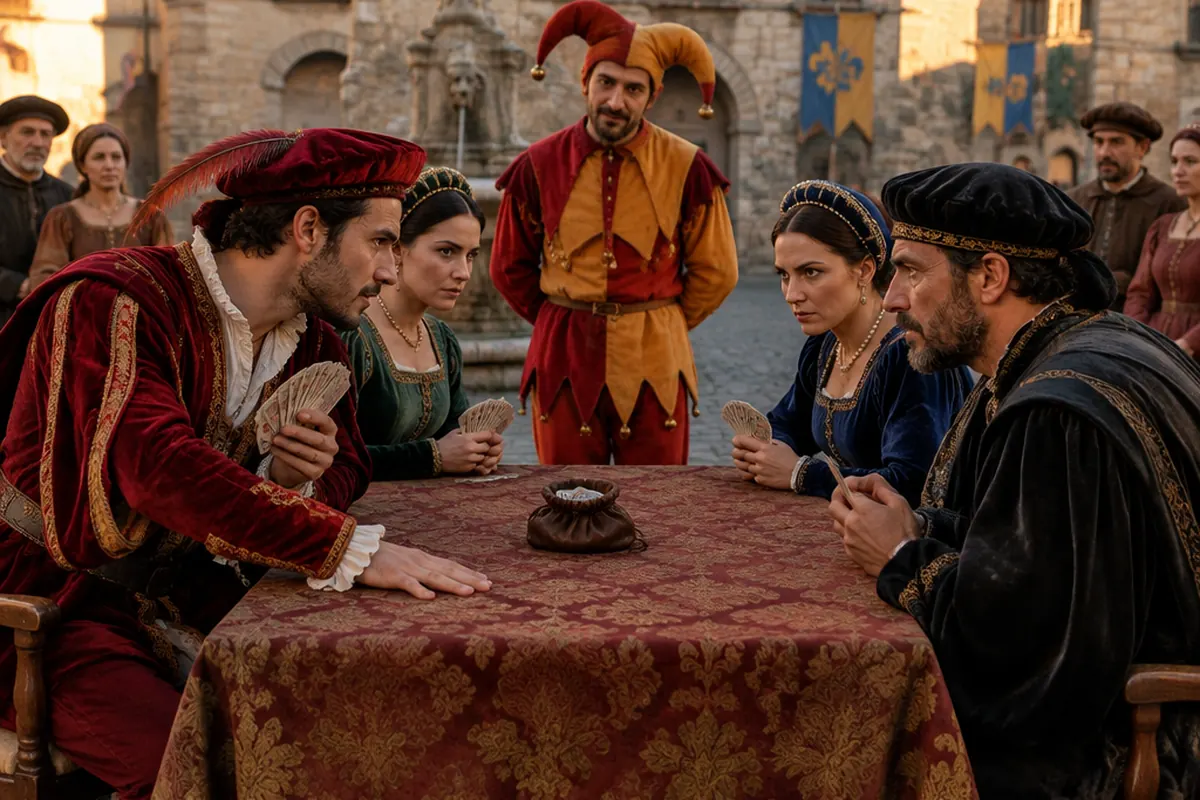
Bid Whist uses a standard deck plus two jokers that must look different: a Big Joker and a Little Joker, 54 cards in all. Four players sit as two partnerships, partners facing each other: you and Viola against Cliff, on your left, and Russ, on your right. Each player gets 12 cards, dealt one at a time to the left, and 6 more go face down to the middle as the kitty. The first dealer is the player who receives the first diamond when the shuffled deck is dealt around; after that the deal moves one seat to the left every hand.
The bidding
Each player speaks once, starting with the one on the dealer's left: pass, or name a bid higher than any bid so far. A bid is a number from 3 to 7, the books your side promises to take above six, together with a word for how the hand will go. Uptown means you will name a trump suit and high cards win. Downtown means you will name a trump suit and low cards win. No trump means there will be no trump suit at all, and if you win the bid you decide afterward whether it plays high or low. A bigger number always tops a smaller one; no trump tops uptown and downtown of the same number; and uptown and downtown of one number are equal, so neither can top the other. A bid of 5 promises 11 books. Once the dealer has spoken the bidding is over. If the first three players all pass, the dealer may not pass and must bid.
Trump, the kitty and the bury
The winner of the bid, the declarer, now names the trump suit or, after a no trump bid, says uptown or downtown. Then the declarer picks up the kitty, which makes a hand of eighteen, and buries any 6, from the hand, from the kitty or both, jokers included. The buried cards go face down in front of the declarer and count as the first book won by that side. Nobody else ever sees them during the hand.
The play
The declarer leads the first card; play goes to the left, and the winner of each book leads the next. You must follow the suit that was led if you can. If you can't, you may trump or throw any other card. In a hand with a trump suit, both jokers belong to it and outrank everything: the Big Joker first, the Little Joker second, then the ace. So a joker follows a trump lead: if your only trump is a joker, you must play it, and if you also hold an ordinary trump you may play either. The highest trump wins the book; with no trump in it, the highest card of the suit led wins.
Which card is highest depends on the bid. Uptown, cards run the usual way, ace, king, queen down to the two. Downtown, the ace stays on top and the rest turn over: ace, two, three, and so on up to the king, which is the lowest card of its suit. At no trump the same two orders apply to every suit, and the jokers are worth nothing: they can never win a book, and by default you may play one only when you have no card of the suit led. If someone leads a joker at no trump, the next player can play anything, and the first card that is not a joker sets the suit everyone must follow.
Scoring
There are 13 books in a hand: the 12 tricks and the buried 6. Only books above six count. If the bidding side takes six plus its bid or more, it scores one point for every book above six it took, including the extras. If it falls short, it is set: it scores nothing for its books and loses the number it bid instead. A no trump bid scores double either way. The other side neither gains nor loses, unless you turn on Defenders' books. The game ends when a side reaches 7 points, which wins, or falls to minus 7, which loses. With scores that can only rise or fall for the bidders, a game rarely lasts more than a handful of hands.
A worked hand. You bid 4 uptown and name hearts as trump, so your side needs ten books. The bury gives you the first one.
- You and Viola win nine of the twelve tricks. With the buried six, that is ten books, four above six.
- Four is what you bid, so you make it and score 4. Cliff and Russ score nothing.
- Had you taken only eight tricks, nine books, you would have been set: minus 4.
- Had the bid been 4 no trump, the same ten books would have scored 8, and the nine books minus 8.
Playing it well
Bidding
Count the books your hand should take on its own, then add one for the bury, a little for the six cards in the kitty, and about two for your partner. Jokers and a long suit with its top cards make an uptown hand; aces and a run of low cards make a downtown hand, because the ace is high either way. A hand full of aces and solid suits but no joker is a candidate for no trump, where the jokers held against you are dead. With one round of bidding, there's no second chance to tell your partner anything, so if Viola has already bid and your hand is only a little better, let her keep it.
The bury
With a trump suit, keep the jokers and your high trumps, and bury the low cards of a short side suit so that you can trump it later. At no trump, the jokers are the first cards to bury, since they will never win a book there. Remember that the six you bury are already a book, whatever they are.
The play
As declarer with plenty of trumps, draw the other side's trumps early, starting with the jokers, so your aces and long suit can't be trumped later. When your partner's card is already winning, play low and keep your good cards for later; second hand plays low, third hand plays high. When a book is lost, throw your least useful card. Count the jokers and the trumps as they fall. Downtown, remember that a king is the weakest card in its suit and a deuce one of the best.
The Company in Bid Whist
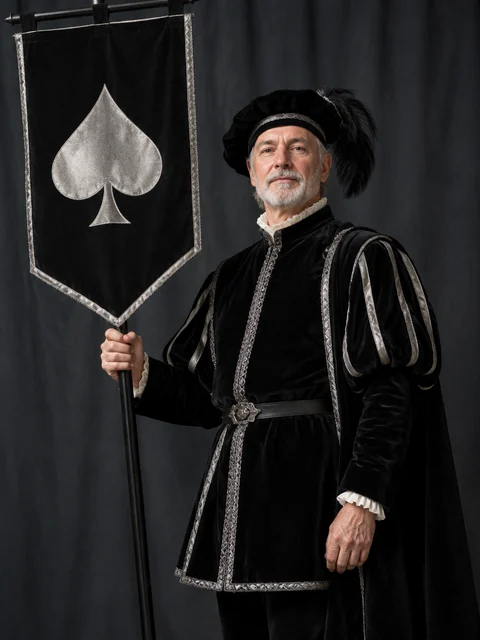
The jokers are jesters who travel with the Company: the Big Joker in crimson, gold and green, the Little Joker in black and white, so you can tell them apart at a glance. In the Classic deck they are plain cards drawn in crimson and in ink, each with a star and its name. The Herald names the bid that won and the trump, announces the bury, and calls out a Boston when a bid of seven is made. A bid made gets a fanfare, and a side that is set bows its heads.
Pagat files Bid Whist with the auction whist games and notes how widely it is played among African Americans. Bicycle says plain Whist came from England and led straight to Bridge, and scores it on the tricks a side takes beyond six; Bid Whist keeps that count of books above six and adds the auction, the kitty and the jokers.
Questions players ask
What happens if somebody reneges?
Under Pagat's rules a side that fails to follow suit when it could gives three of its books to the other side. This table never lets you play a card that breaks the rules, so a renege can't happen here.
Can downtown top uptown here?
Yes, if you want it to. Pagat notes that many people let a low bid with trump top a high one of the same number; turn on Downtown over uptown and a 4 downtown tops a 4 uptown.
What's a Boston?
A bid of seven, the most there is: the bidders need every book. Some tables award a bonus for it; this one scores it like any other bid, and the Herald still calls it when it is made.
Can I play Bid Whist without the jokers?
Not at this table, which plays the 54-card game. The 52-card game, with a four-card kitty, bids from one to seven and a score to 21, is described on the rules page.
Sources
Last updated